
Paper roll transshipment does not end when the rolls are removed from the arriving truck. The cargo must remain identifiable by batch, be prepared for the next consignee and be reloaded to an agreed schedule. When the two transport stages do not coincide, intermediate holding and any additional operations need to be arranged beforehand.
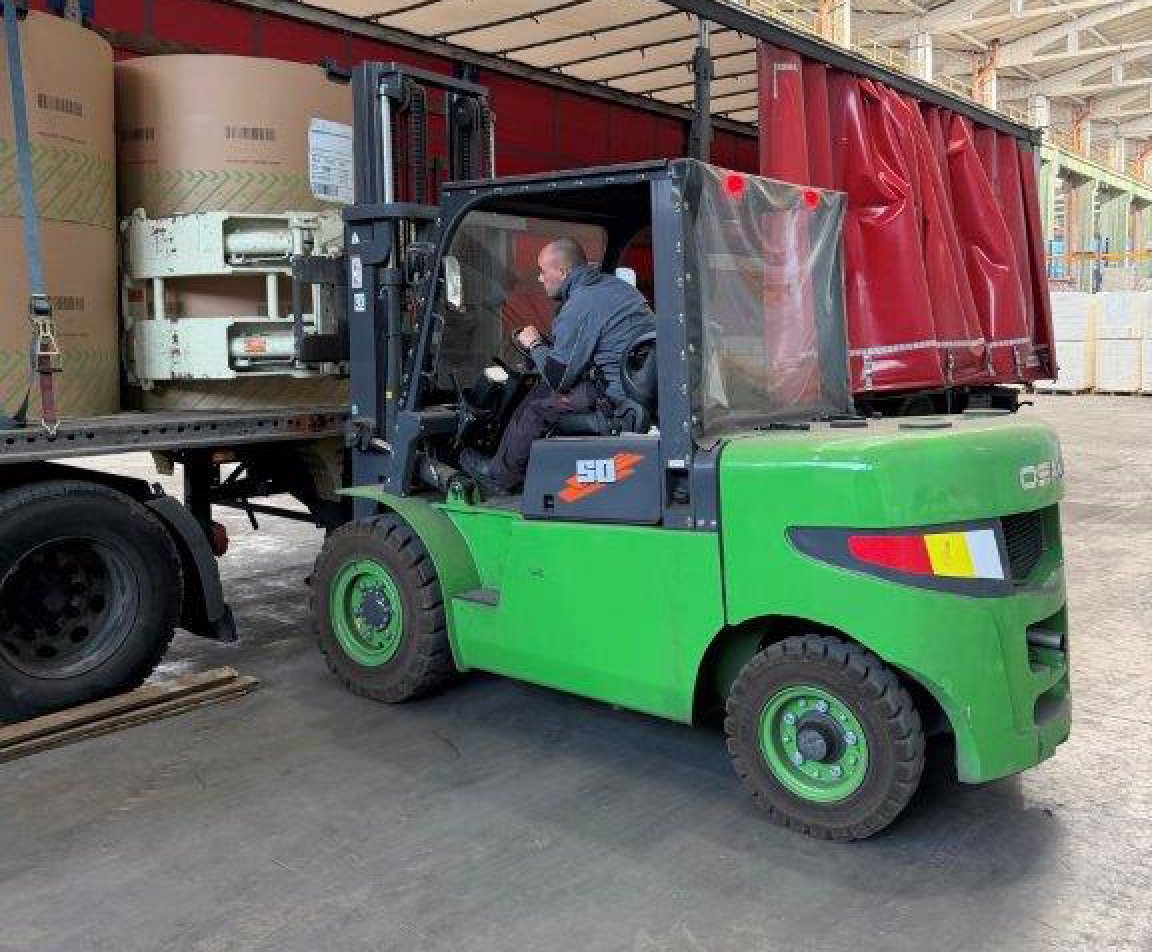
Roll dimensions and access to the cargo
A technical assessment needs information about each different load unit. The total truck load does not establish whether an individual roll can be handled with a particular clamp and the available access.
- Dimensions: roll diameter and width, including packaging.
- Mass: individual roll weight and total shipment mass.
- Identification: quantity, batch, markings and consignee for the relevant allocation.
- Position: orientation inside the vehicle and available side or rear access.
- Handling: instructions, packaging condition and characteristics of the paper.
Photographs of the loaded vehicle help show the arrangement and working space. They supplement rather than replace dimensions and weights. Permitted clamp pressure and the attachment are determined by the cargo and equipment, not by one standard setting for every roll.
Coordinating inbound and outbound transport
Transshipment with a short holding period and an operation involving separate storage require different arrangements. The expected arrival, readiness of the next truck and the person confirming changes must be known. Having two vehicles at the premises does not guarantee an immediate transfer between them.
If outbound transport is delayed, an agreed holding location and period are necessary. Where quantities will be split, consignee allocations should be supplied before unloading to avoid unnecessary subsequent movements.
Transshipment pricing and quotation scope
The quotation should identify the operations being instructed and how they are charged, rather than grouping everything under an undefined handling charge.
- Unloading: removal from the inbound vehicle using the agreed access and equipment.
- Internal movement: positioning in a designated area and any additional handling.
- Storage: the agreed period between movements and arrangements for changes.
- Preparation: allocation by consignee, quantity checks and positioning for dispatch.
- Reloading: the operation onto the next vehicle and any agreed waiting time.
The charging basis and any minimum operations are established for the enquiry. A universal price per roll or tonne would not reflect differences in dimensions, access and work required. Send the roll dimensions, weights and photographs for a quotation with a defined transshipment scope.
Receipt and traceability between the two journeys
- Quantity and identifiers: match arriving units against the accompanying documents.
- Visible condition: check packaging, edges and signs of moisture or mechanical damage that can be identified on receipt.
- Discrepancies: separate and record affected units and notify the responsible contact.
- Next consignee: identify which rolls are being prepared for each vehicle and delivery.
If an inbound batch is split between two consignees, that allocation must remain identifiable during internal handling. This is an example of an arrangement agreed for the shipment, not an additional service automatically included.
Intermediate storage when schedules do not match
The holding area must allow the batch to remain identifiable and accessible for dispatch. Rolls are positioned according to the particular material and packaging instructions, avoiding contact with wet or contaminated cargo. Any visible loss of protection requires agreement on the action needed before onward transport.
Moisture sensitivity and condensation cannot be addressed with a universal waiting period for every paper grade. Requirements should be supplied beforehand. Here, temporary storage means intermediate operational holding, not an automatically applicable customs procedure.
Loading sequence for the next delivery
- Confirmed allocations: establish which units are leaving and their consignees.
- Delivery sequence: access at the first unloading point should not require unplanned handling of the remaining cargo.
- Vehicle and positioning: consider access, permitted roll positions and mass distribution.
- Securing: agree a method appropriate to the rolls and movement.
- Handover: check identifiers, quantities and documents on dispatch.
This sequence reduces the need for repeated handling. It does not replace a technical assessment of the particular loading operation or establish a universal number of straps or clamp-pressure setting.
Preparing an enquiry for the Sofia warehouse
A Logistics combines receipt, handling, storage and preparation for onward transport at its warehouse premises. Specialised roll attachments allow the proposed operation to be assessed, but feasibility is confirmed against the cargo’s actual dimensions, weight and position.
Specify both vehicle types, expected times, holding requirements, consignees and a coordination contact. Provide the inbound and onward transport details to agree roll receipt, holding and reloading.