
When production equipment arrives from several suppliers on different dates, a coordinated export shipment does not begin with finding the last available truck. First, someone must establish which machines and components have arrived, what is still missing and how the complete batch will be dispatched. Consolidation in Sofia connects separate inbound deliveries with a controlled preparation process for the onward shipment.
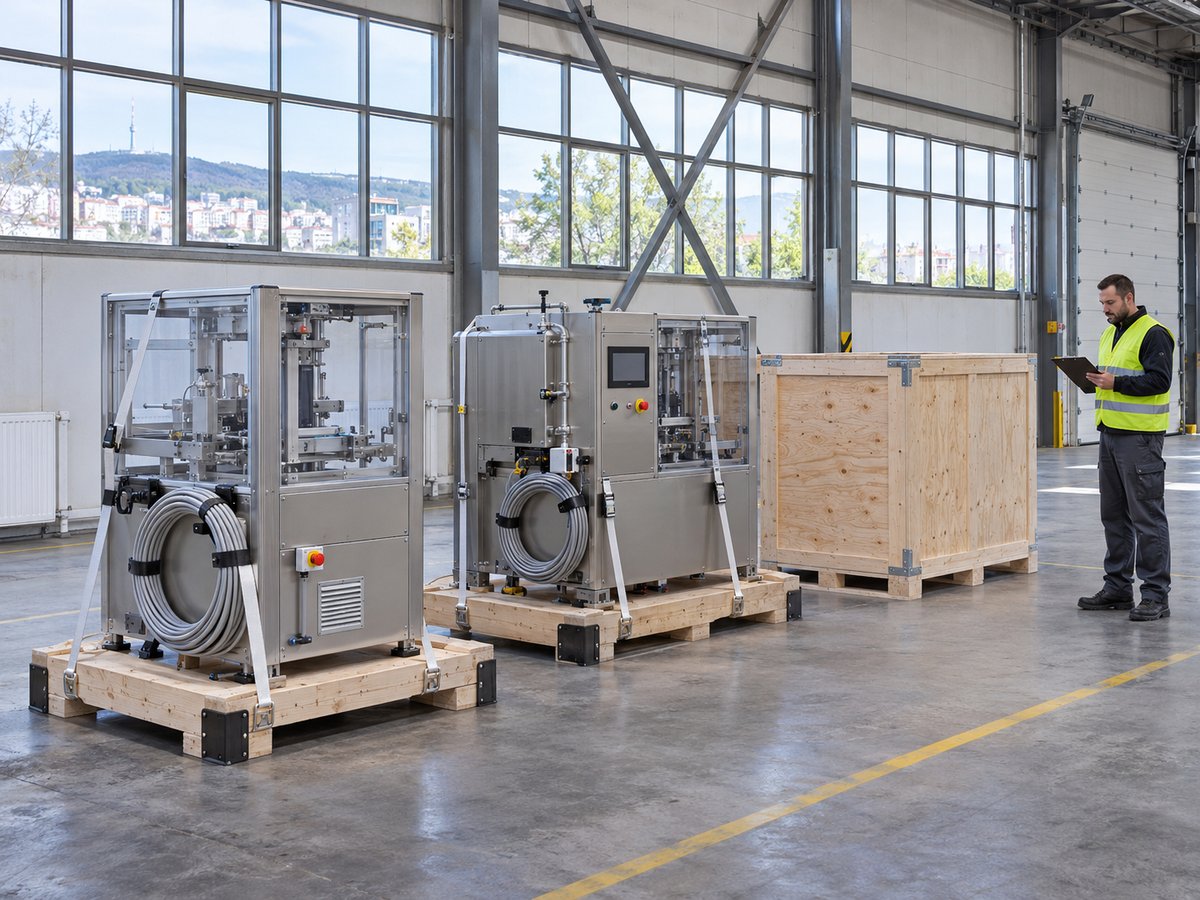
This does not necessarily mean groupage involving unrelated customers. For a single production project, the unit being managed may be an entire line, one machine with its accessories or a predefined outbound batch. Depending on its final dimensions and transport plan, it may occupy one vehicle, several trucks or a container.
Planning inbound deliveries and warehouse handling
Before the first unloading, a schedule identifies the suppliers, expected vehicles and load units arriving on each vehicle. If one truck carries the main machine and another carries the electrical cabinet, guards and tools, the receiving warehouse needs to understand these connections. A general description such as “line components” is not enough for subsequent consolidation.
The following technical information is required in advance to select the handling equipment and working area:
- Dimensions and weight: the length, width, height and weight of each machine, skid or crate, rather than a total for the truck alone.
- Packaging and support: whether the equipment is secured to a transport base, is unpacked or includes parts that cannot bear a load.
- Lifting: designated lifting points, the permitted handling method and centre-of-gravity information where necessary.
- Vulnerable components: exposed cabinets, projecting shafts, cables, sensors and accessories requiring separate protection.
A forklift’s nominal lifting capacity does not determine unloading feasibility on its own. A long machine with an offset centre of gravity requires an assessment of the load centre, support area and access for forks or lifting accessories. This assessment belongs before arrival, not after the equipment is standing on an open vehicle.
Identifying machines and checking completeness
A practical arrangement gives each unit a project number and its own identifier linked to the packing list. For example, a machine might have a main module M01, an electrical cabinet M01-E and accessories M01-A. This illustrates internal identification; it does not replace the manufacturer’s serial number or documentation.
On receipt, the identifiers and number of units are checked against the accompanying documents. Visible damage, missing packaging and discrepancies are recorded and photographed, while disputed units are separated pending the customer’s instructions. If the accessories crate is missing, the main machine may be physically present without the shipment being ready for dispatch.
This check is not a technical equipment test. Receiving documents and carrying out a visual inspection does not certify that a machine operates or that every part needed for future installation has been supplied. The scope of the check and the person authorised to confirm completeness must be agreed beforehand.
The cost of consolidation and intermediate storage
The quotation covers inbound unloading, the handling equipment required, occupied space and storage duration, additional movements, agreed packaging and outbound loading. Five deliveries on different days may require a different arrangement from one delivery of the same total weight. It also matters whether equipment must be mobilised separately for each arrival.
The planned storage period should allow realistic time for the last components and documents. A delayed cabinet or an unapproved loading plan can hold up an entire batch and require further rearrangement. It is therefore useful to specify both the expected and maximum acceptable storage period, not just the first receiving date.
Send the equipment specifications and delivery schedule for a tailored quotation.
Positioning and protecting equipment before the combined shipment
Loads are separated by project and outbound batch, with access to identifiers and sufficient room for the planned handling. Where space is limited, the first machine received should not block the unit that must be loaded first. The storage plan follows the outbound loading sequence and, where necessary, the unloading sequence at the destination.
A Logistics offers floor storage for non-standard loads and unpacked machinery, together with heavy-load handling inside an enclosed warehouse. This capability does not mean every machine can follow the same handling scheme: its dimensions, lifting points and required attachments must be agreed for the individual delivery.
Exposed machined surfaces, electrical components and loose cables are protected according to the equipment instructions. Accessories remain identifiable instead of being put into an arbitrary common crate. Floor storage does not imply stackability: placing another load on a machine requires explicit permission in its design and transport instructions.
Completing the batch, packaging and authorising dispatch
Dimensions after packaging are confirmed before the final outbound vehicle is booked. Crates, bases and protective elements can change the height, weight and loading-space requirement. The loading plan must account for weight distribution, access for securing the load and the way each unit will be removed at the destination.
The practical pre-dispatch check includes:
- Completeness: the agreed machines, cabinets and accessories have arrived, or a partial shipment has been authorised in writing.
- Document consistency: identifiers and unit counts match the final packing list.
- Transport readiness: dimensions, weights, packaging and planned securing arrangements have been agreed for the selected vehicle or container.
- Receiver readiness: the address, receiving window and unloading equipment are known.
- Batch release: the responsible person has confirmed which units and documents may depart.
If the final delivery is delayed, the customer chooses between waiting and partial dispatch after assessing the consequences. Sending a machine without its electrical cabinet may free warehouse space but complicate receiving and subsequent work at the final site.
Documents and customs status before onward export
The place from which equipment arrives does not establish its customs status. Non-Union goods may arrive under transit, while equipment manufactured outside the EU may already have been released for free circulation. The warehouse needs the applicable documents before receiving the goods so that physical storage and customs conditions are not confused.
The European Commission distinguishes export from re-export according to the goods’ status. Moving Union goods to another EU member state is not a customs export to a third country. When goods leave the EU, the applicable declaration, declarant and customs office of exit must be identified.
The commercial invoice and packing list must identify the outbound batch unambiguously. Where applicable, they are also linked to the MRN, the customs operation’s reference number. An ordinary warehouse does not automatically become a customs warehouse; the required procedure, authorised location and any restrictions affecting the equipment or destination are established separately.
Arranging equipment consolidation with A Logistics
Receiving, intermediate storage and outbound loading require an overall picture of the project rather than a series of unrelated unloading requests. A Logistics coordinates warehouse operations with the equipment characteristics and planned dispatch.
- Inbound schedule: suppliers, collection locations and expected arrival dates.
- Outbound batch: the required ready date and whether partial dispatch is permitted.
- Destination: final country, receiver and receiving requirements.
- Documents and scope: known customs status and the warehouse, packaging and transport operations required.
- Responsible contact: the person who confirms completeness and authorises dispatch.
Request arrangements for receiving, consolidating and dispatching the equipment.